
Indoor LED Display Screen
Why Indoor LED?
Indoor LED displays are designed for spaces where image detail, consistent colour and a clean visual surface matter more than outdoor sunlight output. They bring moving content to advertising environments, stages, broadcast settings, control rooms, meeting spaces and exhibitions. The right indoor display helps an audience read content comfortably at the intended distance while giving the operator a configurable canvas for video, graphics, presentations and live information.
WEFONE’s indoor LED range is based around a practical family of fine-pitch modules. The documented indoor line covers P1.25, P1.53, P1.86 and P2.5 options, with GOB and SMD processes represented across the range and a MASK option included within P2.5. Contact us when you have a room drawing, viewing position or content requirement to review.
The P2.5(32s) GOB module provides a concrete reference configuration. Its pixel pitch is 2.5 mm, with a 128 × 64 module resolution and an approximate screen density of 160,000 pixels per square metre. A documented white-balance brightness of at least 500 cd/m², a 5000:1 contrast ratio and a refresh rate of at least 3840 Hz give buyers a clear starting point for an indoor specification.
Indoor projects should not be specified by brightness alone. Room lighting, audience distance, screen size, content type, maintenance access and the required cabinet arrangement all shape the final selection. WEFONE therefore presents the product line as a system: modules, cabinets, power, control and optional display peripherals are considered together, while project details remain subject to confirmation.
It is also important to keep indoor and outdoor specifications separate. The indoor reference module is documented at indoor brightness levels; outdoor figures must not be transferred to this page. The GOB module documentation records IP65 for that module construction, but this should not be presented as a claim that every indoor screen is an outdoor waterproof installation. Site conditions should remain within the documented indoor use limitation: avoid high-temperature, high-humidity and high-salt-alkali environments.
Product Range Overview
WEFONE’s indoor offer is a configurable product family rather than one fixed screen size. The standard indoor module platform uses a common 320 × 160 mm base dimension. Standard modules are documented with a 3840 Hz refresh rate and brightness typically at 700 cd/m². Flexible indoor modules spanning P1.53 to P2.5 are documented with brightness increased to 900 cd/m². Confirm the exact model, process and final configuration before ordering.
Fine-Pitch Indoor Module Family
| Attribute | Documented indoor range |
|---|---|
| Pixel pitches | P1.25, P1.53, P1.86, P2.5 |
| Base module dimension | 320 × 160 mm |
| Standard refresh rate | 3840 Hz |
| Standard brightness | Typically 700 cd/m² |
| Flexible module pitches | P1.53 to P2.5 |
| Flexible module brightness | 900 cd/m² |
| Processes | GOB and SMD; MASK included within P2.5 |
The pitch family gives a project team room to match visual detail to audience position. A finer pitch can be considered when viewers are closer; a larger pitch can be considered when the viewing position is farther away. This is selection guidance, not a replacement for a site-specific design review.
P2.5(32s) GOB Reference Configuration
The P2.5(32s) GOB module measures 320 × 160 × 17 mm. Each module provides 128 × 64 pixels, and the documented screen density is approximately 160,000 pixels per square metre. Its white-balance brightness is ≥500 cd/m², contrast is 5000:1, colour temperature is 3000~21000K, and viewing angles are H≥160° and V≥140°.
The module uses a HUB75 interface and 4.5~5V voltage. Average module power is 11.3W/pcs; documented whole-screen average power is 244W/m² and maximum power is 488W/m². These figures belong to the documented P2.5 GOB reference and should not be assumed for every pitch or cabinet combination.
Cabinets, Control and Display Peripherals
The indoor system can be paired with 640 × 480 mm indoor aluminium cabinets or 500 × 500 mm rental aluminium cabinets, depending on the intended configuration. Documented accessories include folding poster frames and hanging rods. Power options include 200W, 300W and 400W supplies. Control options listed for the indoor line include Novastar NV3210, MRV412, TB, TU and VX series.
The wider indoor ecosystem also lists A-series cloud media boxes, temperature/humidity and brightness sensors, and CS-series media servers. These are system options recorded in the product information, not a promise that every project includes every item. The final bill of materials should be confirmed against screen size, operating method and content workflow.
Related Indoor Display Formats
The documented indoor line has related terminals for different presentation formats: foldable LED poster screens LP-1.5IS, LP-1.8IS and LP-2.5IS; 116-inch LT-series home theatre products; and 55~98-inch Android smart conference panels. These formats should be treated as related indoor solutions and selected according to the intended use, rather than mixed into a single module specification.
Browse the indoor display range to organise the next step around pitch, format and installation context.
Selection Criteria
Choosing an indoor LED screen starts with the audience and the room. Write down the closest viewing position, the normal ambient light, the content that will be shown, the available wall or rigging area and the maintenance route. Then compare pitch, process, brightness and system configuration against those requirements.
Pixel Pitch and Viewing Position
Pixel pitch is the distance between pixels. The documented family runs from P1.25 through P2.5. Finer pitches such as P1.25, P1.53 and P1.86 can be considered for closer audience positions where image structure needs to remain discreet. P2.5 can be considered for applications with a more distant viewing position. The best choice depends on the room, screen size and content; a pitch label alone does not determine the complete visual result.
Image Detail and Content
A presentation room may prioritise text and diagrams, while an advertising or exhibition display may prioritise video, colour and motion. The P2.5 GOB reference offers 128 × 64 pixels per module, 5000:1 contrast and a colour-temperature range of 3000~21000K. Those values help define the reference module’s capability, but the full wall resolution depends on the number and arrangement of modules in the finished screen.
Brightness and Room Light
Indoor brightness should be matched to the room rather than copied from an outdoor product. The P2.5 GOB reference is documented at ≥500 cd/m². Standard indoor modules are typically 700 cd/m², while flexible P1.53~P2.5 modules are documented at 900 cd/m². Confirm the final brightness for the selected pitch and process, especially when the room has changing lighting or when content must remain clear across a wide viewing area.
Viewing Angle
The P2.5 GOB reference records horizontal viewing angle H≥160° and vertical viewing angle V≥140°. This can be relevant in meeting, exhibition and public-facing environments where viewers are not standing directly in front of the centre line. Treat these as the reference module values and verify the chosen product before approval.
Process and Surface Protection
The indoor range includes GOB and SMD processes, with MASK included within P2.5. The P2.5(32s) reference uses epoxy resin plus VMD vacuum encapsulation in a GOB panelised construction. Its documentation records IP65 for the module and UL94 V-0 flame-retardant PCB. These statements describe the documented module construction. They must not be expanded into a blanket outdoor waterproof-screen claim.
Power Planning
Power planning should use the selected module and finished wall configuration. For the P2.5 GOB reference, average module power is 11.3W/pcs, while documented whole-screen average and maximum values are 244W/m² and 488W/m². These are useful specification inputs, not an electricity-cost or energy-saving claim. The fact base does not provide an energy-cost calculation, so project budgeting should request one separately if needed.
Maintenance Access
The P2.5 GOB reference is documented with front maintenance. This can be important where the back of a screen is against a wall or where access is limited. Cabinet choice still matters: the indoor system lists 640 × 480 mm aluminium cabinets and 500 × 500 mm rental aluminium cabinets. Confirm the service route, spare strategy and cabinet arrangement during design.
Installation & Maintenance
An indoor LED installation should begin with a measured site review. Confirm the wall, frame or hanging point, the screen dimensions, the viewer positions, signal route, power route and access for front or rear service. The fact base does not state a standard installation timeline, so WEFONE should quote timing per project rather than publish a fixed promise.
Fixed Indoor Installations
For a permanent indoor display, the design team can work from the 320 × 160 mm module platform and select an appropriate pitch from P1.25, P1.53, P1.86 and P2.5. A 640 × 480 mm indoor aluminium cabinet is one documented cabinet option. The control and power package is then matched to the final screen arrangement. Structural and electrical details must be confirmed for the specific site.
Rental and Folding Formats
The indoor ecosystem lists 500 × 500 mm rental aluminium cabinets, folding poster frames and hanging rods. It also lists foldable LED poster screens in LP-1.5IS, LP-1.8IS and LP-2.5IS formats. These options support projects where portability, a folding presentation format or temporary deployment is part of the brief. Exact handling, transport and setup requirements remain project-specific.
Signal, Power and Control
Documented control options include Novastar NV3210, MRV412, TB, TU and VX series. Power options include 200W, 300W and 400W supplies. A-series cloud media boxes, sensors and CS-series media servers are also listed for the indoor ecosystem. Final selection should follow the content source, control workflow and wall configuration; do not assume that every listed component is required.
Day-to-Day Care
Routine care should follow the selected model’s technical and support documentation. Keep the indoor environment within the documented limitation: avoid high temperature, high humidity and high salt-alkali conditions. The P2.5 GOB reference is front-maintainable, which should be considered when planning inspection and replacement access. Warranty period and maintenance-response SLA are not recorded in the fact base and are therefore intentionally not stated here.
Why WEFONE
A Documented Indoor Platform
WEFONE’s indoor line is organised around a 320 × 160 mm base module dimension, with pitches from P1.25 to P2.5 documented for the standard family. This provides a consistent starting point for comparing close-viewing and more distant-viewing requirements without pretending that one pitch fits every room.
Multiple Construction Options
The product information records GOB and SMD processes, plus a MASK option within P2.5. The P2.5(32s) GOB reference adds epoxy resin and VMD vacuum encapsulation, front maintenance, and a UL94 V-0 flame-retardant PCB. These are concrete configuration details that can be checked during technical review.
System-Level Configuration
The indoor offer extends beyond modules to cabinets, power, control and media peripherals. Listed options include indoor and rental aluminium cabinets, 200W~400W power supplies, Novastar NV3210/MRV412/TB/TU/VX series, A-series cloud media boxes, sensors and CS-series media servers. The final package is confirmed per project.
Project-Based Pricing
Indoor LED pricing depends on the selected pitch, process, wall size, cabinet, control package and installation scope. No public currency figure is included in this draft. Request a project quotation with the intended application, room information and screen dimensions so the specification can be matched to the actual brief.
Frequently Asked Questions
Which pixel pitches are available for WEFONE indoor LED screens?
The documented standard indoor family covers P1.25, P1.53, P1.86 and P2.5. GOB and SMD processes are listed across the range, with a MASK option included within P2.5. Confirm the exact process and configuration for your project.
What are the P2.5(32s) GOB module specifications?
The module measures 320 × 160 × 17 mm, uses a 2.5 mm pixel pitch and provides 128 × 64 pixels. It records ≥500 cd/m² white-balance brightness, 5000:1 contrast, 3000~21000K colour temperature, H≥160° and V≥140° viewing angles, and ≥3840Hz refresh rate.
How bright are the indoor products?
The P2.5 GOB reference is documented at ≥500 cd/m². Standard indoor modules are typically 700 cd/m², and flexible P1.53~P2.5 modules are documented at 900 cd/m². Brightness should be confirmed for the selected model and room.
Is front maintenance available?
Front maintenance is documented for the P2.5(32s) GOB module. Cabinet and site access should still be reviewed before the final configuration is approved.
What power figures are documented?
For the P2.5 GOB reference, average module power is 11.3W/pcs. Documented whole-screen average power is 244W/m² and maximum power is 488W/m². These figures are not an electricity-cost estimate.
What cabinet and control options are listed?
The indoor system lists 640 × 480 mm indoor aluminium cabinets and 500 × 500 mm rental aluminium cabinets. Listed control options include Novastar NV3210, MRV412, TB, TU and VX series. The final choice depends on the screen design.
Can WEFONE provide a warranty period or maintenance SLA?
A warranty period and maintenance-response SLA are not recorded in the current fact pack. Request the applicable support documentation and project terms rather than relying on an unstated number.
How much does an indoor LED screen cost?
Pricing is handled by project quotation. No public currency figure is published in this draft. The pitch, process, screen area, cabinet, control system and installation scope should be included in the quotation request.
Get Started
A productive indoor LED enquiry can be prepared in three steps:
1. Describe the space — share the application, room conditions, closest viewing position and available installation area.
2. Confirm the display brief — compare the documented pitch family, process, brightness, viewing angle and maintenance approach.
3. Request a project quotation — ask WEFONE to confirm the complete module, cabinet, power, control and installation scope.
For advertising, stage, control-room, education, meeting or exhibition requirements, contact WEFONE for an indoor configuration review. The documented indoor applications include advertising media, stage and studio work, security control, education and conferences, and exhibitions. Final suitability should be checked against the site conditions and selected model.
Tested per SJ/T 11141-2025 (General Specification for LED Display Screens). Tested per GB 17625.1-2022 (Limits for Harmonic Current Emissions). Tested per UL 94 V-0, PCB substrate rating. Per WEFONE specification (2026): contrast ratio 5000:1, colour temperature 3000–21000 K, viewing angle ≥160° H / ≥140° V, white-balance brightness ≥500 cd/m², operating −20 ℃~+40 ℃, MTBF ≥5,000 h. GOB encapsulation available for select models with ingress protection rating IP65 (lamp surface).
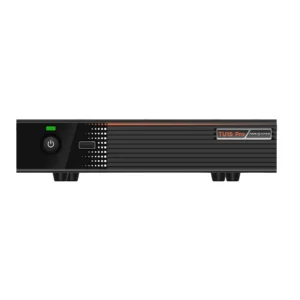
Novastar TU15 PRO media box
Novastar TU15 PRO media box delivers high-performance LED content playback for businesses across Dubai & UAE. Compact design with reliable…

P1.5 Indoor LED Screen Cabinets
Description Our P1.5 Indoor LED Screen Cabinets are designed to deliver the highest level of image clarity and performance for…

P1.86 Indoor LED Screen Cabinets
Description Our P1.86 Indoor LED Screen Cabinets are engineered to deliver ultra-high definition visuals and superior performance for various…

P2.5 Indoor LED Screen Cabinets with Masking
Description Our P2.5 Indoor LED Screen Cabinets with masking are designed to provide exceptional image clarity and uniform brightness for…